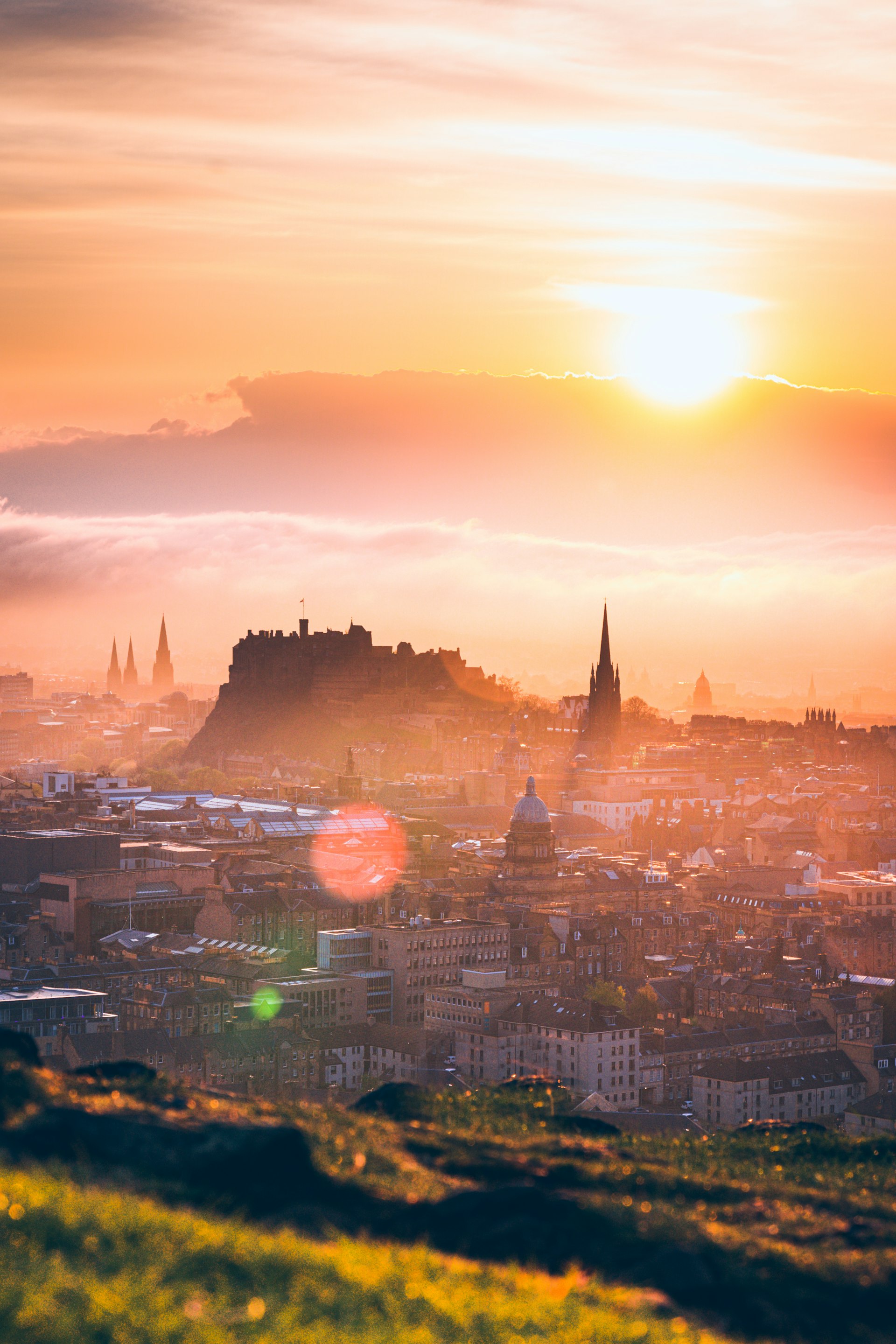
Arthur's Seat is one of Edinburgh's most iconic natural landmarks—an ancient volcano rising dramatically from Holyrood Park, right in the heart of the city. Climbing to its 251-metre summit rewards you with arguably the best views in Edinburgh, stretching from the castle-topped Old Town to the Firth of Forth and beyond to the distant Highlands.
The volcano last erupted around 350 million years ago during the Carboniferous period. What remains today is the eroded core of the volcano, shaped by glaciers during the last Ice Age. The distinctive crags and peaks you see are the remnants of ancient lava flows.
For centuries, Arthur's Seat has been a place of recreation, reflection, and even royal hunting. Today, around a million people climb it each year, making it one of the most accessible wilderness experiences in any major European city. Whether you're seeking exercise, photography opportunities, or simply an escape from the busy streets below, Arthur's Seat delivers.
Walking Routes to the Summit
Main Path from Holyrood
Moderate45-60 mins upThe most popular route starting from the Scottish Parliament. Clear path with some steep sections near the summit.
Salisbury Crags Route
Moderate-Hard60-75 mins upDramatic route along the cliff edge with incredible views. Steeper but more scenic than the main path.
Dunsapie Loch Route
Easy-Moderate20-30 mins upShortest route from the car park at Dunsapie Loch. Best for those wanting an easier climb.
Duddingston Village Route
Moderate50-60 mins upQuieter approach from the charming village of Duddingston. Passes by the ancient loch.
What You'll See
From the summit, the views are extraordinary in every direction. To the west, Edinburgh Castle dominates the skyline, with the Old Town spilling down the Royal Mile towards you. The elegant Georgian New Town stretches north, while to the east you can see the Bass Rock and the North Sea coastline.
On clear days, you can see the Highlands to the north, the Pentland Hills to the south, and across the Firth of Forth to Fife. The entire city is laid out below you like a living map, making this the perfect place to orientate yourself at the start of your Edinburgh visit.
Within Holyrood Park itself, you'll pass dramatic features like Salisbury Crags (a famous cliff face), three lochs (St Margaret's, Dunsapie, and Duddingston), and the ruins of St Anthony's Chapel. Keep an eye out for the native wildlife too—you might spot swans on the lochs, kestrels hovering above the crags, or even the rare sight of feral goats on the cliffs.
Tips for Climbing Arthur's Seat
- ✓Wear sturdy footwear - the paths can be rocky and slippery when wet
- ✓Bring layers - it's always windier and cooler at the summit
- ✓Carry water, especially on warm days
- ✓Start early for sunrise or visit at sunset for golden hour photos
- ✓Check the weather forecast - avoid climbing in high winds or storms
- ✓Allow 2-3 hours for the full experience including time at the summit
- ✓The summit can be crowded on weekends - weekday mornings are quieter
- ✓Dogs are welcome but must be kept under control (sheep graze in the park)
History & Legends
The name "Arthur's Seat" has mysterious origins. Some connect it to King Arthur of legend, suggesting this could be Camelot (one of many claimed locations across Britain). Others believe it derives from the Gaelic "Àrd-na-Said" meaning "height of arrows," or possibly from a Scottish prince named Arthur who lived in the 6th century.
Archaeological evidence shows humans have used this hill for thousands of years. Bronze Age burial sites have been found on the slopes, and the hill fort remains on the summit suggest Iron Age occupation. In medieval times, the area was a royal hunting ground, and Holyrood Park was enclosed by King James V in 1541.
The park gained darker associations in the 19th century when seventeen miniature coffins containing wooden figures were discovered in a cave on the hillside. Their purpose remains a mystery to this day—theories range from witchcraft to memorials for murder victims. Some of the coffins are now displayed in the National Museum of Scotland.
Frequently Asked Questions
How long does it take to climb Arthur's Seat?
Most people reach the summit in 45-60 minutes from Holyrood, though this varies by fitness level and route. Allow 2-3 hours for the full round trip with time to enjoy the views.
Is Arthur's Seat difficult to climb?
It's a moderate hike suitable for most fitness levels. The paths are clear but can be steep and rocky in places. It's not a technical climb but does require reasonable fitness. The shorter route from Dunsapie Loch is easier.
Is Arthur's Seat free?
Yes, completely free! Holyrood Park is open 24 hours and there's no charge to climb Arthur's Seat or explore the park.
What is Arthur's Seat?
Arthur's Seat is an ancient volcano that last erupted around 350 million years ago. At 251 metres (823 feet), it's the highest point in Holyrood Park and one of Edinburgh's most distinctive landmarks.
When is the best time to climb Arthur's Seat?
Early morning for sunrise is magical and less crowded. Late afternoon/sunset offers beautiful golden light. Spring and autumn have comfortable temperatures. Summer days are longest but can be busy. Winter climbs are dramatic but check conditions.
Can you see Arthur's Seat at night?
Yes, the park is open 24 hours. Night climbs for city lights are popular, but bring a torch and take extra care on the paths. Full moon nights are particularly special.
Getting to Arthur's Seat
From the City Centre
The main entrance at Holyrood is a 15-minute walk from the Royal Mile. Head down the Canongate past the Scottish Parliament to the palace, then enter the park.
By Bus
Several bus routes stop near Holyrood Park entrances. Check local bus services for routes to Holyrood, Duddingston, or the Commonwealth Pool.
By Car
Limited parking at Dunsapie Loch and near the palace. The park road is open to vehicles but closes at certain times. Street parking available in surrounding areas.
Opening Times
Holyrood Park is open 24 hours, 365 days a year. The park road has variable closing times. Best experienced during daylight for safety.